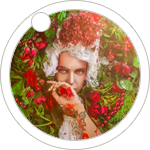
 Fairy Tale
[Genres]
Fairy TaleThe fairy tale genre is a predecessor of the fantasy genre, historically speaking. Folklore featuring elves, giants, goblins, trolls, dragons, knights, mermaids, witches, and similar elements are the basis of the fantasy genre that sets heroes of a magical medieval world against just such foes. Fantasy stories and games often presume that such creatures are quite real and that they're something anyone with any sense and education, within the context of that fantasy world, knows as real and dangerous, if hopefully far away.
However, the power of a fairy tale-or a game set in a fairy tale inspired setting-is that magic, magical creatures, and enchanted forests bigger on the inside than outside are presumed to be nothing more than stories made to entertain or frighten adults and children. Thus, when a talking animal or a house on legs is encountered, they are truly amazing and fantastical, as opposed to something that might be expected.
Which argues that to pull off a fairy tale adventure or campaign, a GM might want to present the game in a modern setting. In a modern setting, characters have regular jobs that don't normally involve hunting goblins or exploring ancient ruins. This means that when the moths take shape and become the cloak of a princess of summer come to beg a favor or steal a child, or the house grows legs and runs away one morning, player characters will be rightfully amazed (and probably somewhat terrified).
The genre of fairy tales is a wide one, crossing into almost every culture and encompassing everything from early oral stories passed down from generation to generation to the more modern literary fairy tale. What makes something a fairy tale? While there's a great deal of discussion around that question, most have a number of things in common: a series of far-fetched events; fantastical beings such as talking animals, elves, goblins, mermaids, witches, and dragons; and objects that have magical elements.
One of the powers of a fairy tale—or a game set in a fairy tale-inspired setting—is its ability to create a sense of wonder and to evoke players' imaginations while still allowing them to keep one foot in the known. The very settings themselves are both enchanted and somehow familiar, whether the characters are entering a magical woods, falling down a rabbit hole, or embarking on a voyage to Neverland. Those beasts and beings who stalk such places are equally wondrous, and offer fantastic starting points for any number of adventures.
To heighten the sense of wonder in a fairy tale adventure or campaign, a GM might consider presenting the game in a modern setting. In a modern setting, characters have regular jobs that don't normally involve hunting goblins or helping talking fish solve puzzles. This means that when the moths take shape and become the cloak of a princess of summer come to beg a favor or steal a child, or the house grows legs and runs away one morning, the player characters will be rightfully amazed (and perhaps somewhat terrified).
You could easily have fairy tales in other times and settings, but for our purposes in this section, we'll deal with a default setting in the modern day. The player characters are probably normal people, not secret agents or special investigators. Whatever the setting, the main thing to remember when preparing to run a fairy tale-themed game is that it's desirable to invoke a sense of wonder rather than fear. A sense of enticement, of yearning, and the promise of a release from the everyday problems that plague us. What does it matter if your internet provider has jacked up your bill yet another $20 a month when the stray cat on your patio begins to talk about the land of moonbeams, fairy gold, and music that will shiver a soul with everlasting delight?
Of course, every good story—and game— requires a complication, problem, or threat to overcome. Otherwise, what's the point? In a fairy tale, the odd, furry, magical little creatures you've discovered to be responsible for stealing your shoes might turn out to be the nicer cousins of an altogether more vicious version that will also steal the beating heart out of your chest, if given half the chance.
That's when a fairy tale game threatens to become a game of horror. Indeed, horrific elements are certainly a part of fairy tales, particularly those early tales told around the fire. But to retain the style, horror should not predominate. For every erlking, demon, or giant encountered, players should be dazzled and aided by a helpful fairy, a prince of summer, or a talking cat or rabbit that knows secrets of all sorts. And as is noted in the genre section on horror, if everything is terrifying, then nothing is. If the thrill of wonder fails to find the PCs more than just on their initial introduction to the game, view it as an opportunity to try again.
If you're looking for inspiration in creating a modern fairy tale adventure or campaign, consider starting with a variety of works by master tale-spinner Neil Gaiman. Of particular note, check out Coraline, Neverwhere, and The Ocean at the End of the Lane. You can also watch an animated version of Coraline. Other things to watch for fairy tale inspiration include The Neverending Story (story by Michael Ende, directed by Wolfgang Petersen), Pan's Labyrinth (written and directed by Guillermo del Toro), Labyrinth (screenplay by Terry Jones, directed by Jim Henson), and Nocturna (directed by Adrià Garcia & Víctor Maldonado). You could also watch at least the first season of the TV show Once Upon a Time, as well as The Magicians based on the novels by Lev Grossman.
Other roleplaying games also provide great inspiration. As with stories and movies, there are too many to list them all here, but if you have a chance, take a look at Mouse Guard (by Luke Crane, based on the graphic novel series by David Petersen).
Retaining a fairy tale esthetic can be difficult. You've got to maintain mood and atmosphere at all times. Consider these tips.
Give the players time to develop their characters before they meet the talking cat, the strange little man selling singing chocolate mice, or the raccoon wearing clothing and glasses on the street corner. Let them get attached to their characters, at least a little, so that when those PCs see something wondrous, the players will be thrilled.
Use descriptive language to paint the picture of what the players see, and use your body language and gestures. For example, if you're describing a faerie forest, don't simply tell them that they see a faerie forest. Instead, as you gesture up and with wide eyes, tell the players something like “The forest canopy stretches high overhead, alight with tumbling motes of firefly light like drifting stars. The air is bracing and smells of the cool night, peppermint, and thunderstorms. From afar, a music like harps and violins gambols, somehow suggesting a great midnight feast taking place someplace deeper within the press of golden trees.”
Fairy tale games are often one-shot sessions or a short arc of a few sessions. They can be difficult to run as long-term campaigns, but it's possible. If that's what you want to do, remember that you need to keep alive wonder and reward at the same pace as the characters discover the dark side of fairy tales. Gifts of golden armor or magic beans should follow them fighting back forces of the Unseelie Court busy making baby-stealing plans in the modern world.
Faerie (also called by many other names) is a dimension of magic separate from but closely parallel to the mundane world. It doesn't matter whether Faerie is just a collective term for thousands of separate curled-up dimensions hidden in corners, in closets, or at the center of forests, or it's one continuous realm that overlaps the real world where it's thinnest. It's a place those with open hearts can find by following a way between tall trees (or looming library shelves) to a realm where everything is different. Where elves walk, nymphs dance, unicorns gallop, and both natural growths and built structures become vast and enchanting.
Humans don't tend to do well in such a world if they stay too long, as the sensory input is hard on the nervous system. But fey creatures depend on it, like plants to the light. A fey creature too long cut off from its land of origin (or its stream, hill, or burrow) slowly becomes mortal and then dies.
When a fey creature is cut by silvered or cold iron weapons, they temporarily lose the sustaining benefit of their connection to Faerie. This severed connection usually disrupts a fey creature's ability to heal. A silvered weapon is one that contains silver as part of an alloying process, has silver inlay, or has been coated in a dusting of silver powder (which usually lasts only through a single fight). In truth, many items in the modern era are cold-forged, while many others are not. We suggest that any hand-forged item containing iron could be considered a cold-forged weapon for harming fey creatures. Thus, most bullets and other modern items wouldn't be treated as cold iron by this definition, but some would fit the bill.
The Fairy Tale Wonders table is a way to quickly generate simple delights and greater wonders appropriate to a fairy tale esthetic. This table is to be used about as often as the one that follows—the Fairy Tale Threats table. If wonders don't beckon to the PCs who step off the path most traveled, why would they leave their jobs as accountants, biologists, journalists, and so on just to be eaten by trolls or imprisoned forever in a fairy tower? Most of these wonders should be presented as GM Intrusions.
| d20 | Wonder |
|---|---|
| 1 | Inheritance: A letter in a golden envelope arrives in the mail or is found in the attic addressed to a character, letting them know they have inherited a large chest. When found, the chest might contain a faerie artifact and hints as to the character's faerie ancestry. |
| 2 | Musical marvel: The character finds a musical instrument that allows them to play perfectly while using it, even if they've never studied that instrument before. |
| 3 | Adventure mouse: An enchanted mouse leads the characters to a clue they need to get on with their adventure. |
| 4 | Friend indeed: A princess of summer learns of the character's plight, and in the guise of a friendly reporter, lawyer, or police officer, extracts the PCs from a difficult situation with charm so intense it seems supernatural (and probably is). |
| 5 | Faerie path: The character finds a secret for getting across town using a “shortcut” that urns an hour's drive in traffic to a five-minute walk down a sunny garden path. |
| 6 | Cup of many liquids: Whatever mundane consumable liquid the character wishes for appears in this small cup: coffee, tea, hot chocolate, brandy, and so on. |
| 7 | Faerie luck: Tiny human figures with wings flit overhead, wave and smile, and wish the characters a good day. For the rest of the day, the PC has a sense of luck and happiness, and an asset on all noncombat tasks attempted. |
| 8 | Nightmarket: The character finds a door to a previously unknown market held at night, staffed by all manner of beings—and several talking animals dressed as people—selling the kinds of goods one might find at a flea market, a farmer's market, and in a few cases, a magic shop. |
| 9 | Faithful companion: A huge shaggy dog shows up, carrying in its mouth something the character lost. (Ask the player to make up something their PC lost.) The dog might continue to follow that character, especially if they care for it. |
| 10 | Hat of perfection: The character finds a hat that seems to go with everything they wear and provides an asset to all interaction and disguise tasks. A label on the hat brim reads “Property of the King of Good Endings.” |
| 11 | Alluring goal: A floating castle is sometimes glimpsed at sunrise, but only the characters can see it. |
| 12 | Treasure in an egg: Among the eggs in a bird's nest is found one made of solid gold. |
| 13 | Talking portrait: A portrait on the wall animates and the person depicted tells a story, which might simply be a story of their life but could also be a warning or directions to someplace else. |
| 14 | Magic bookstore: A bookshop opens on the corner, offering amazing books whose titles are new to the characters (and are not found anywhere else). |
| 15 | Bonus room: The character has a dream where they find another room in their house that looks out onto a faerie forest. Upon waking, the room proves to be real. |
| 16 | Mysterious benefactor: Something amazing happens for the character—they get a book deal, win the lottery, find something thought lost, or similar—after which a silver card smelling of cloves arrives with the message “You're welcome. ~M.” |
| 17 | House with legs: A house across the street stands up on hairy legs, moves a few feet to the left, and settles again, apparently once again as normal as ever. |
| 18 | Flowered jetstream: A person wearing a long cape flies overhead on what appears to be a broom. Flowers of all varieties drift down in their wake. |
| 19 | Gingerbread winds: A strong wind blowing in from the east smells of gingerbread, sugar, and wonderful baking things. If followed to its source, a small home is discovered where a fey baker is at work, and willing to share their creations. |
| 20 | Candyfall: When a storm front rolls in, candy wrapped in golden, copper, and silver foil drops from the clouds. |
The Fairy Tale Threats table provides more dangers you can throw at your PCs in a setting where the unexpected can lead to dire repercussions almost as often as wonders. The results are not meant to be the major story arc, though you could probably spin some of them out to serve that purpose.
Many of the suggestions in the Fairy Tale Threats table work well as GM Intrusions.
| d20 | Thrats |
|---|---|
| 1 | Wild Hunt (level 5): Bafying and screeching, a pack of hounds (level 2) carries a sledge through the sky driven by an antlered entity. (Treat as a prince of summer.) The hunt notices characters who fail a difficulty 3 Speed-based task to find cover. |
| 2 | Unexpected eclipse: A strange different moon, briefly interposes itself between the region the characters inhabit and the sun. Midnight scrabblers ooze out of hard surfaces and attack until the eclipse fades after about a minute. |
| 3 | Trolls: A couple trolls emerge from the alley, under the overpass, or from the heart of the forest looking to fill their bellies. |
| 4 | Cursed trap (level 4): A chest, spell, or found object transfers the character bodily to a fairy tower where they are imprisoned unless they succeed on a difficulty 4 Intellect-based task. |
| 5 | Feral trees: Awakened trees attack those who do not know the proper passwords or who are not accompanied by a fey friend. |
| 6 | Razorblade butterflies: What at first seems to be a delightful mass of colorful butterflies flitting through the field is revealed as threat as creatures are afflicted with hundreds of tiny cuts from the fluttering wings. |
| 7 | Item with a mind of its own: An object gained during the adventure—be it a cypher, a faerie artifact, or a letter that must be delivered to the Queen Under the Hill— awakens to limited mind and movement, and decides it likes to play hide and seek. |
| 8 | Gingerbread winds, dire: A strong wind blowing in from east smells of gingerbread, sugar, and wonderful baking things. If followed to its source, a small home is discovered where a fey baker is at work, willing to share their creations. But the baker is secretly a cannibal. |
| 9 | Angry noble: A prince(ss) of summer takes an interest in the characters and begins to work against them. |
| 10 | Greedy wall: level 4; Armor 3; victims within immediate range of this graffiti-and-artcovered wall must succeed on an intellect defense task or be drawn into the wall and become themselves one more piece of art. Trapped creatures gain one additional attempt to escape. Otherwise, they must be freed, or the wall must be destroyed. |
| 11 | Masquerade, dire: Fancy invitations on ebony paper with scarlet ink arrive inviting the PCs to a masquerade ball. However, an evil witch is behind the summons. |
| 12 | Blight: A faerie wood, path, or another area the PCs have become attached to sickens and begins to die. It might be a curse, or perhaps goblins have taken up residence beneath the ground, poisoning it. |
| 13 | Allergic to magic: The character reacts unexpectedly to the appearance of a fey being, a spell, a faerie artifact, or similar and must succeed on a difficulty 4 Might defense task or fall into a deep sleep of indeterminate length. |
| 14 | Wish upon a star (level 5): A falling star of green fire streaks down and impacts; PCs who fail a Speed defense task suffer 5 points of damage and must deal with the antagonistic fey creature that steps out of the crater. |
| 15 | Angry ants: Whispering insults, obscenities, and slurs, angry ants surge up from the ground and attempt to pull the PCs down. |
| 16 | Falling house: A house on legs stumbles, and the PCs must succeed on a difficulty 4 Speed defense task or suffer 8 points of damage and, on a failed difficulty 6 Might defense task, become buried under the rubble. |
| 17 | Spoken curse: An entity curses the character(s). Is it a real curse, or just a passing threat? Only time will tell. |
| 18 | Trapped: When the characters attempt to use the magic door or exit they expect will take them either home or to some safe spot, they discover it no longer works, or instead takes them into a dank dungeon where a cruel shadow elf waits. |
| 19 | Three blind mice, see how they run: A slidikin with a carving knife of sharpness attacks the characters. |
| 20 | Inevitable dragon: A dragon learns of the PCs, first investigating them in human shape under false pretenses, before deciding how it will ambush them and take all their treasures for itself. |
The base foci you make available to your players should be the base foci in the genre where your fairy tale is set, with perhaps a few more fantastic foci thrown in (if not already set in the fantasy genre).
| Calculates the Incalculable | Changes Shape | Commands Mental Powers | Consorts With the Dead | Crafts Unique Objects | Doesn’t Do Much |
| Eliminates Occult Threats | Entertains | Explores Dark Places | Fell Through A Rabbit | Hole | Fights Dirty |
| Figures Things Out | Finds The Flaw in All | Things | Focuses Mind Over | Matter | Governs |
| Helps Their Friends | Howls at the Moon | Hunts Outcasts | Hunts With Great Skill | Infiltrates | Interprets the Law |
| Is Hunted by Moths | Is Idolized by Millions | Is Licensed to Carry | Leads | Learns Quickly | Likes to Break Things |
| Lives in the Wilderness | Looks for Trouble | Masters Weaponry | Moves Like a Cat | Murders | Needs No Weapon |
| Never Says Die | Negotiates Matters of Life and Death | Operates Undercover | Plays Too Many Games | Runs Away | Sees Beyond |
| Serves In An Elite Military | Squad | Separates Mind From Body | Slays Monsters | Solves Mysteries | Throws With Deadly Accuracy |
| Was Foretold | Wields Two Weapons at Once | Works For A Living | Works the Back Alleys | Wonders | Works the System |
| Would Rather Be Reading |
Generally speaking, creatures of the fantasy genre are appropriate for fairy tales when used as the unexpected threat or wonderment in an otherwise normal setting. However, other creatures, including those summarized above, are also useful. Most fey creatures of level 2 or higher regain 1 point of health per round while above 0 health, unless wounded by silvered or cold iron weapons.
| Assassin | Cambion | Crime boss | Cryptic moth | Detective | Djini |
| Dragon | Erlking | Faerie | Ghost | Giant | Giant rat |
| Golem | Guard | Hydra | Mad creation | Marauder | Mechanical soldier |
| Occultist | Ogre | Orc | Priest | Shadow elf | Skeleton |
| Soldier | Soldier, elite | Statue | The Minotaur | Thug/bandit | Typhon |
| Vampire | Wendigo | Werewolf | Witch | Wizard, mighty | Zombie |
| Giant snake | Giant spider | Goblin | Guard | Mad creation | Midnight shambler |
| Mokuren | Nuppeppo | Occultist | Priest | Prince(ss) of summer | Professor |
| Secret agent | Shadow elf | Shoe thief | Slidikin | Soldier | Thug/bandit |
| Werewolf | Witch |
Artifacts in the fantasy setting and magic items in others games focused on fantasy gaming would also be suitable for a fairy tale setting. However, every fairy tale artifact should come with some quirk that sets it apart from simple "wand of fire" or similar item. Come up with your own or roll a quirk from the table.
| d10 | Quirk |
|---|---|
| 1 | Is sometimes invisible. |
| 2 | Cries like a baby if jostled. |
| 3 | Becomes cold as ice to the touch and emits cold vapor when danger threatens. |
| 4 | Contains a secret compartment that invariably holds a chunk of rock broken from what might be a strange jade sculpture. |
| 5 | Also serves as a key to some magically locked doors and chests. |
| 6 | Bites owner with tiny teeth if jostled, dealing 1 point of damage. |
| 7 | Always muttering and complaining, though useful warnings and other information can sometimes be gained. |
| 8 | Jealous of any other manifest cyphers, artifacts, or beautiful objects in the wielder's life. |
| 9 | The “painting” of a princess of summer on the object sometimes leaves it, robbing the artifact of power. |
| 10 | Causes flowers to grow wherever it is stored or set down. |
Level: 1d6+1
Form: Knife (light weapon)
Effect: This weapon functions as a normal weapon of its kind. When the wielder gets a special major effect when attacking, they can choose to lop off one of the target's limbs.
Depletion: 1 in 1d20
Level: 1d6+2
Form: Fiddle apparently made of bone
Effect: This instrument acts like a normal instrument of its kind. If the wielder is trained in its use and plays an appropriate tune, those within short range who can hear it must succeed or fall asleep, become amenable to suggestion, follow the fiddle player in a light trance, or take some similar action. Effects last no more than ten minutes.
Depletion: 1 in 1d20
Level: 1d6+2
Form: Hefty ale tankard carved of stone
Effect: In addition to serving as a convenient means to drink a variety of liquids, the tankard can be used as a medium weapon that inflicts +2 damage (for a total of 6 points of damage) if the tankard was previously topped off with good ale or spirits. Anyone who picks up the tankard is practiced in using it in this fashion. Surprisingly, using the tankard as a melee weapon does not cause more than a modicum of good ale or spirits to slosh out.
Depletion: 1 in 1d20 (check per fight)
Level: 1d6+3
Form: A medium mirror with elaborate frame
Effect: Answers one question per day, but usually not directly. Depletion: 1 in 1d20
In a fairy tale setting, GMs may want changelings and pixies to be mechanically different from humans. Below are some possibilities for how this might work.
You grew up in the normal world but discovered-or perhaps you knew all along-that you weren't really who everyone thought you were. That's because when you were still very young, the child whose name you have now was stolen, and you were put in its place. Abandoned by your people and distrusted by the mundanes who sense your otherworldliness, you are prone to falling into deep funks. However, you are just as adept at pulling yourself out them when the situation demands it. If nothing else, you're supremely adaptable.
You have the following characteristics:
You have an amulet with a strange symbol on it, the only link you have with your past, however enigmatic.
From the following list of options, choose how you became involved in the first adventure.